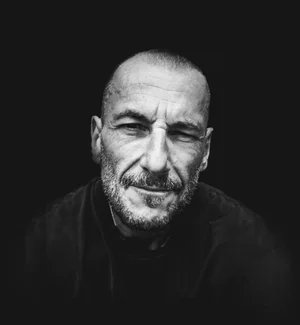
A deeper me
I did not arrive at Psychosynthesis as a blank page.
By the time I stepped into the training I had already spent more than a decade walking a different road. Twelve years of recovery. Twelve years learning how to live honestly again. Much of that time spent in the AA community, sitting in rooms with others navigating the same questions about responsibility, meaning and change. Those years quietly shaped my understanding of people long before I ever encountered formal psychological theory.
The exercise was never about starting from zero. It was about asking a more honest question.
Could the work I had been doing intuitively deepen into something more deliberate?
Experience and instinct carry weight, but they are not the same as understanding the deeper structure of the human psyche. I wanted to challenge myself. To see whether the path I had been walking could grow into something more intentional. Something grounded not only in lived experience but in psychological depth.
In that sense the training became less about acquiring knowledge and more about standing in front of a mirror.
Could I do this work with integrity?
Could I hold the weight of another person’s inner world without trying to control it?
Could I guide without imposing?
Psychosynthesis begins with a deceptively simple premise. The human being is not a single fixed identity. We are made up of many parts. Voices within us that carry fear, ambition, anger, compassion, creativity, shame and hope.
Before the course I understood this idea intuitively. Anyone who has spent time in recovery rooms recognises the internal conflict people carry. One part wants to grow. Another part wants to retreat. One part believes change is possible. Another insists nothing will ever shift.
Psychosynthesis gave language and structure to something I had already witnessed many times.
But the real shift came through the method.
My instinct, shaped by years of supporting others, was often to help people move forward quickly. To offer perspective. To illuminate a path. That instinct comes from care, yet the training gradually introduced a quieter discipline.
Easing back.
Allowing space.
Holding the room without rushing to fill it.
At first this felt counterintuitive. Silence can feel uncomfortable. When someone is struggling every instinct pushes you to step in and offer guidance.
Yet week by week something became clear.
The most powerful insights rarely arrive when someone is being guided.
They arrive when someone finally hears themselves.
Psychosynthesis refers to this capacity as the development of the observer. The ability to step back from thoughts and emotions and recognise that they are parts of us rather than the whole of who we are.
For the people I work with, this understanding can be transformative.
A person who believes they are defined by failure begins to see that failure is a narrative rather than an identity. Someone overwhelmed by anxiety begins to recognise that the anxious voice is one part among many.
Something shifts when people realise they are not trapped inside their own thinking.
They can observe it.
This changes the nature of the work.
The practitioner becomes less of a guide pushing someone towards answers and more of a steward protecting the conditions where those answers can emerge.
Holding space is often misunderstood. On paper it can sound passive, as if the practitioner is doing very little.
In reality it requires a great deal of discipline. I saw this level of skill in the leaders and coach practitioners guiding the course. Watching them work became one of the most valuable parts of the training. The restraint, the attentiveness, the quiet judgement of when to step in and when to allow space. It is a subtle craft, and observing it in practice proved as instructive as any theory we studied.
This understanding has already begun to reshape how I sit with clients.
I notice myself slowing down. Listening more carefully. Allowing conversations to unfold without forcing direction. Often the most meaningful moments arrive in the pauses between words.
Psychosynthesis also expanded my understanding of the psyche beyond the idea of wounds and problems.
The training places equal emphasis on what it calls the higher unconscious. The dimension of the psyche connected to meaning, creativity, purpose and aspiration.
This perspective resonated strongly with the work I am drawn to.
Many of the people I work with are not clinically unwell. On the surface their lives appear functional. Careers are progressing. Families are intact. Responsibilities are being met.
Yet there is often a quiet disconnection.
A sense that life has become mechanical. That somewhere along the way a deeper part of themselves was left unexplored.
Psychosynthesis provides a language for this experience. It suggests that growth is not only about resolving pain from the past. It is also about responding to the call of what we might become.
That idea sits naturally alongside the work I do through endurance, movement and community. Whether it is men sitting together after demanding training sessions or individuals reflecting on the direction of their lives, the underlying question is often the same.
Who am I becoming?
The training also turned the lens inward.
It is impossible to study the human psyche without encountering your own internal landscape.
Over time I became more aware of the different parts of myself that appear in my work. The part that wants to rescue people quickly. The part that wants to appear competent. The part that quietly wonders whether I always have the right response.
Psychosynthesis encourages the development of something deeper than these parts.
A centred presence.
A place within the self that can observe all of these impulses without being controlled by them.
Learning to return to that centre has been one of the most meaningful personal outcomes of this training. The quality of presence a practitioner brings into the room shapes everything that follows. People sense when someone is grounded enough to stay with uncertainty.
This kind of presence cannot be manufactured. It grows from self-awareness and continued inner work.
As the course draws to a close I realise the learning has not ended. If anything it has deepened the path I was already walking.
I arrived carrying twelve years of personal experience and years of sitting alongside others in their struggles.
I leave with something quieter but more substantial.
A deeper understanding of the human psyche.
A deeper respect for the power of space.
And a deeper relationship with myself.
Perhaps that is the most important outcome of all.
Because the more honestly we understand ourselves, the more safely we can sit with another human being as they begin to understand themselves.
In that sense the training did not simply prepare me to support others.
It revealed something deeper within my own life as well.
A deeper patience.
A deeper presence.
And ultimately, a deeper me.