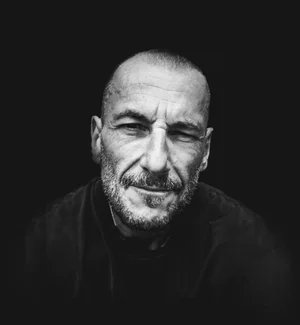
The fear we carry.
I was reminded of the Circle of Control this week while helping a client who had fallen into a deep hole of panic around a situation at work.
Not the kind of anxiety that comes before an important meeting. This had travelled much further than that. It had begun to shape the way he was sleeping, thinking and moving through the rest of his life. What started in the office had quietly spread into everything else.
It struck me how easily fear can be imposed by another human being.
A senior leader says something carelessly. An unexpected meeting appears in the diary. A passing comment is left hanging in the air without explanation. For one person it is another day at work. For another, it becomes the beginning of a story they cannot stop replaying.
Pressure can improve performance.
Fear rarely does.
The real damage begins when fear refuses to stay where it belongs. It follows us home. It arrives at the dinner table. It wakes us at three in the morning. It steals our attention from the people sitting right in front of us. Long after the meeting has finished, the body continues behaving as though the threat is still present.
That is because the nervous system doesn't understand office politics.
It understands only one question.
Am I safe?
This is one of the reasons I have become fascinated by the relationship between psychology and the body.
We often assume panic is a problem of thinking. We believe if we could simply challenge our thoughts or become more rational, everything would settle down.
Sometimes it does.
Often it doesn't.
Because fear is not just happening in the mind.
It is happening throughout the body.
The vagus nerve, one of the most remarkable communication pathways we possess, is constantly carrying information between the brain and the body. Every breath, every heartbeat, every tightening of the jaw and every shallow inhale becomes part of a conversation.
Your body is continually gathering evidence.
Is this safe?
Should I stay alert?
Do I need to protect myself?
When enough evidence suggests danger, the body prepares accordingly. Muscles tighten. Breathing shortens. Sleep becomes lighter. Digestion slows. Our attention narrows until all we can see is the problem in front of us.
Then we make a mistake that almost all of us have made.
We try to think our way out of a body that still believes it is under attack.
No amount of positive thinking can completely override physiology.
The body has to be invited back into safety.
That is why I have grown to appreciate practices that once seemed almost too simple to matter.
A slower breath.
A longer exhale.
A walk without your phone.
Standing barefoot on the grass.
Feeling your feet against the floor.
Softening your shoulders.
Relaxing your jaw.
None of these solve the situation itself.
They simply begin telling your nervous system that the immediate threat has passed.
Only then does the mind begin to regain perspective.
This is where I often return to one of the simplest coaching tools I know.
The Circle of Control.
When fear takes hold, our attention rushes towards everything outside our influence.
What are they thinking?
What if I fail?
What happens next?
How will this end?
The harder we chase certainty, the further it seems to move away.
The Circle of Control quietly invites us back.
Back to our next decision.
Back to our response.
Back to our values.
Back to the only place where influence has ever really existed.
The challenge may remain.
The uncertainty may remain.
But we no longer hand over every part of ourselves to it.
Perhaps that is the lesson.
We cannot always choose what life places in front of us.
We cannot control every conversation, every decision or every outcome.
But we can learn to recognise when fear has overstayed its welcome.
We can help the body remember what safety feels like.
And from that place, we can begin making wiser decisions again.
Because the body keeps listening.
The question is whether we are giving it reasons to believe it is safe.