

Progress makes you feel alive.
Meaningful Monday
Five thought-provoking minutes
to set the tone of your week.
The moment a boy becomes a man
For my son Rufus
His childhood was not easy. I tried to protect him, but I could not keep the pain away. Some of it was my doing. I own that. A larger proportion came from, and still comes from, the side of his life I cannot control. That is the burden my son will have to learn to carry into his future.
Rufus found the boxing club on his own. He was drawn to it instinctively, as if something in him recognised this as a place where unfinished business could be worked through with honesty. Boxing does that. It attracts the parts of us that want structure, discipline, consequence. It does not lie. It meets you exactly where you are.
Running does the same for me.
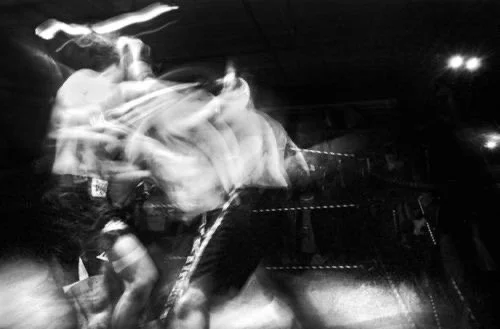
On Saturday I watched his first competition fight. His second bout (the first he won), but my first time watching him step into that space. A ring surrounded by strangers. Parents from the opposing club. He pulled on his gloves and faced his fears. At sixteen, he showed more courage in that ring than I ever did for the first three decades of my life.
The fight was scrappy. His opponent was clearly better coached, more technical. Early on, the other boy landed cleaner, more considered blows. Then the fire in my son’s belly came alive. He closed distance. He fired back. Gloves thudding. A right hand landing. A clinch. A shove. Another exchange. Fighting from frustration, but with real fire. This strength won him a draw.
With that fire in him came anger and frustration as the adrenaline surged through his body. He threw his gloves onto the canvas. Watching this as a parent is confronting. A sharp reality check of the pain you realise you cannot take away.
Afterwards, while the room buzzed and opinions flew around us, I took him to one side. Away from the crowd. Away from the theatre. I put my hand on his shoulder and held the back of his neck. I could feel the adrenaline still running through him, his pulse loud under my palm. This is where boys either harden or learn.
I said it calmly.
Learn to control your emotion.
Not because emotion is bad, but because uncontained emotion will run your life for you. Power without control always turns on its owner. He listened. He didn’t sink or dismiss me. He came back into himself.
And then he took a slow, deep breath. He raised his head, pulled back his shoulders, looked me in the eye and said,
“Ok dad. Thanks for being in my corner.”
That was the moment.
The moment the boy became a man.
A young man choosing regulation over reaction. Responsibility over excuse. Presence over ego.
This is how boys become men. Not through winning, but through learning where their strength ends and their discipline begins.
My son has so much life ahead of him. So many times he will be knocked on his arse. Challenged. Confused. Forced to navigate situations no one else can step into for him.
But I now know this.
For every blow he receives, he will learn how to counter. Again. And again. Ten times harder.
Rufus, I love you.
And I will always be in your corner.
The simple life.
We live inside a noise machine.
It hums from the moment we wake. Notifications, headlines, performance metrics, opinions dressed up as urgency. Life is no longer just lived. It is interpreted, optimised, narrated, monetised. Every feeling analysed. Every choice freighted with consequence. Every silence filled.
Complexity used to belong to philosophers and theologians. Now it sits in your pocket.
Modern life keeps us in a low-grade state of anxiety because anxiety is profitable. Calm people are hard to manipulate. Grounded people do not scroll endlessly. They do not impulse-buy solutions to problems they were persuaded they had. Fear sharpens attention. Confusion weakens judgement. Both are excellent conditions for selling.
So we are nudged to worry. About our health. Our relevance. Our children. Our future. Our status. Our productivity. Our purpose. We are told that if we are not slightly overwhelmed, we are falling behind.
This is not accidental.
The mind is constantly invited to overthink meaning. What does this say about me. Am I doing enough. Is this the right path. Could I be more fulfilled, more successful, more admired. Even rest is framed as recovery for further output. Even joy becomes something to document and compare.
The result is a strange tension. We are materially safer than most humans who have ever lived, yet psychologically more fragile. Our ancestors worried about survival. We worry about self-image.
The simple life is not about retreating to a cabin or rejecting ambition. It is about removing unnecessary cognitive load. It is about choosing what deserves your attention and letting the rest pass without comment.
Simplicity begins with recognising how little is actually required for a good day.
A body that moves. Food that nourishes. Work that feels useful rather than performative. A small circle of people who know you without needing an explanation. Time outside. Time offline. Sleep.
Most of what we are told we need is layered on top of these basics. More knowledge. More optimisation. More identity. More certainty. Yet certainty has never been the human condition. We just forgot that.
The simple life accepts uncertainty without turning it into a crisis. It replaces constant evaluation with quiet participation. You do the next right thing. You take care of what is close. You stop trying to win a game that has no finish line.
There is relief in lowering the volume.
When you step out of the anxiety economy, you begin to notice how much of your stress was borrowed. How many fears were suggested rather than discovered. How often your nervous system was reacting to abstraction rather than reality.
Simplicity is an act of resistance. It is choosing depth over breadth. Presence over performance. Enough over more.
Life does not need to be endlessly explained to be meaningful. Often it asks only that you show up, pay attention, and stop making it harder than it already is.
That is not giving up.
That is coming back to yourself.

If you want to take the island, you have to burn the boats.
That sounds like bravado. It isn’t. It is a statement about psychology. About what happens when the mind senses a quiet exit. The half-open door. The internal clause that says, I’ll try, but only if it feels safe. We keep escape routes not because we are weak, but because the brain is built to preserve comfort. It would rather you remain intact than become something new.
Most of us live with one foot still on the boat. Sensible. Measured. Over-reasoned. We call it responsibility. Often it’s just fear masquerading as responsibility. Because I believe somewhere along the way we forget to play.
Not play as in distraction. Play as in engagement. Curiosity. The willingness to enter something uncertain and let it shape us. We stop inhabiting life and start managing it. Everything must be justified. De-risked. Optimised. Life becomes a project. The future a spreadsheet. The present something to endure.
Training for this Sunday’s GOAT has been quietly dismantling that pattern in me.
On paper, it is a race. Mountain. Distance. Elevation. Heat. All the sensible reasons to feel apprehensive. And I have felt them. The mind is excellent at building futures in which you fail. It rehearses collapse with forensic detail. It calls this preparation.
But something has definitely shifted.
Instead of rehearsing disaster, I am learning to rehearse engagement. To meet the edge not as a threat, but as an invitation. Fear and excitement are physiologically identical. The body cannot tell the difference. Only the story in the mind decides whether that energy will bring paralysis or make you feel alive.
So I am changing the story.
Each long climb becomes a conversation rather than a test. Each session a way of saying, I am here for this. Not to conquer the mountain. Not to dominate it. To enter it. To be shaped by it.
Last week my coach Lee, who is running the 100-mile section himself, said something that blew my mind.
“I’m going to play with the mountains. Not fight them. Just play.”
So here we are back at the one powerful word: Play.
It reminded me that the point of voluntary struggle is not proof. It is presence. It is the chance to feel yourself fully in the work.
The race is not there to define me. It is there to challenge me. Like life. If we move through days managing risk, dampening appetite, staying reasonable. We mistake control for maturity. We forget that growth does not come from safety. It comes from risk. From stepping into the unknown without a script. Re-learning how to play.
You do not take the island by hiding the boats.
You take it by stepping forward. By striking the match. Lighting the fire. By destroying the exit strategy.
Let’s burn those fucking boats.
The day I became a grown up.
For my daughter Poppy. The moment you were born was the moment everything changed.
I have said versions of this before, but it has become clearer to me over these recent years of change. While walking alongside other people as they reach the edge of their own lives and realise something has to give. Careers that no longer fit. Relationships that ask more honesty. Bodies that refuse to be ignored. We all arrive at these points eventually. What we often fail to name is the catalyst.
Nothing changes without one.
A catalyst is not always loud. It is not always dramatic. Often it arrives quietly and rearranges you from the inside. It alters the cost of staying the same. Suddenly the old way of living becomes untenable. You are asked to grow, whether you feel ready or not.
For me, that catalyst was you, Poppy.
You did not arrive with instructions. You did not need to. Your presence alone raised the stakes. The choices I made were no longer theoretical. They had weight. Consequences. A future attached to them. I could no longer drift or delay or pretend that time would sort things out on my behalf.
I often think of the film When Harry Met Sally, which we both love. It is a story that understands something essential. That life is shaped less by grand plans and more by the people who force us to confront who we are becoming. Harry spends most of the film circling himself. It is only through loving Sally that he is finally required to stand still and grow up.
As Rob Reiner the films director put it, “A man is only half of himself until the right woman comes into his life” For me, that moment was not romantic. It was the day you were born. You were the woman who made me decide to be a better man.
You rearranged my priorities without warning. You gave gravity to my behaviour. You demanded integrity simply by existing. I became more responsible, more awake to the life I was shaping, because you were watching, even when you were small.
Now you are 21. Fully yourself. Stepping into the world as you are. Thoughtful. Capable. Carrying your own edges and questions.
The work that began the day you arrived is still unfolding. For both of us.
That is the quiet power of a true catalyst. It does not just change a moment. It changes a life.
So to my beautiful daughter Poppy, who turned 21 this week.
Happy birthday, kiddo.
You won’t find reasonable men on the tops of tall mountains.
I read that line this morning and something in me finally gave way.
I cried. Properly. The inevitable release of feeling that had been stored rather than felt. The kind that comes when you realise you have been holding yourself together for longer than is sustainable.
At home in the UK, my Dad is very ill. With me, the quiet accumulation of responsibility, worry, and anticipatory grief does not announce itself. It simply settles into the body and asks to be carried while everything else carries on.
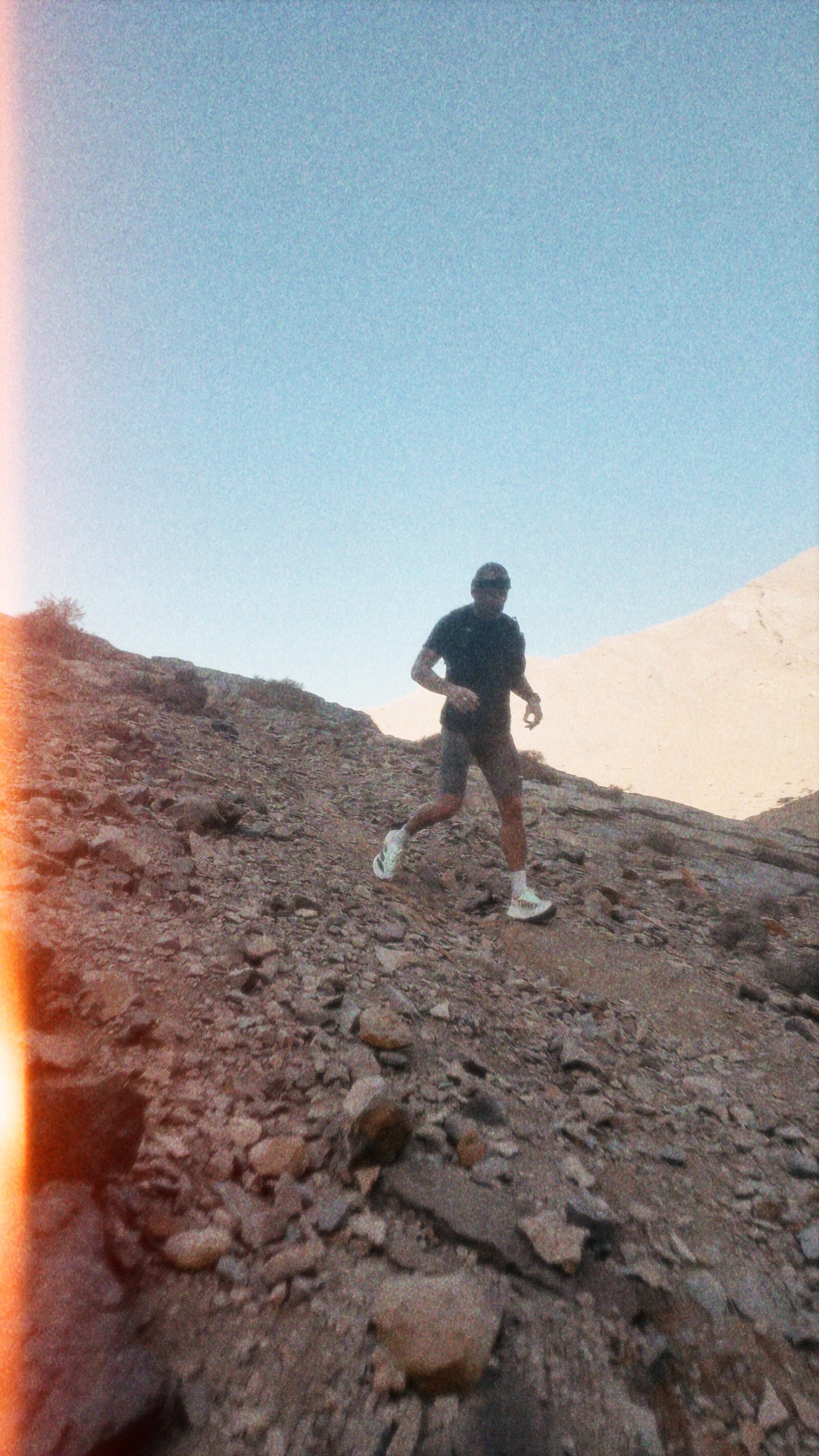
And alongside the personal mess, I have been circling doubt for days. A different kind of doubt. One I kept telling myself was separate from the sadness at home. I labelled it selfish, indulgent, unrelated. The GOAT. A pending 55K ultra, now only days away.While life has been loud, the route has been quietly breaking itself open to me in weekend trial sections. Long climbs. Exposed endless rock. I had a completion time in my head. Ten hours. Clean. Controlled. Something that made sense. But this route does not care about my plans.
The numbers have been drifting. Twelve hours. Thirteen. Fourteen if things unravel. And with them came the sensible voice. The reasonable voice. The one that speaks in outcomes and reputations and sensible withdrawals. This is too hard. This is misjudged. Better to pull out now than carry a DNF. Better to step away with dignity intact.
This weekend brought a run-through of a brain-breaking 8K descent that left us all levelled. Legs gone. Focus stripped bare. I walked off the mountain having quietly accepted that this race, this year, was not meant to be mine.
As I woke this morning my mind drifted, as it often does, towards movement. Other runs. Other challenges. Safer ideas that still looked hard enough to feel respectable. I reached for my phone without much thought and opened Instagram. And there it was, as if delivered without asking. A post from Cameron Hanes, headlined by a line from Hunter S. Thompson.
“You won’t find reasonable men on the tops of mountains.”
You do not go to the mountains to be reasonable.
You go because the mountain asks a question ordinary life avoids. What happens when effort is the only thing left. Who are you when the plan collapses and the story stops flattering you. How quickly do you abandon yourself when the numbers turn against you.
That is what brought everything to a head. Not fear. Not fatigue. Recognition.
These things are not meant to be easy. There is no perfect time, no flawless preparation, no version where the day opens cleanly and rewards you for good behaviour. The difficulty is deliberate. The doubt is designed. The conditions exist to make quitting feel sensible.
DNF is always there. That is what gives the choice its gravity.
But the point is not to engineer comfort. The point is to stay when staying stops being attractive. To keep moving when the outcome refuses to behave. To release the fantasy performance and commit to the honest one.
I realised this morning that the tears were not really about the race. They were about grief I have been trying to manage by staying composed. About learning, again, that there is no clean way through love or loss. My lifelong habit of waiting for certainty before committing suddenly felt exposed. Wanting things neat. Wanting guarantees. As if any of the things that truly matter ever arrive that way.
Like life, the mountain does not offer certainty. It offers a path and a question.
Am I willing to walk it anyway.
This is not about ten hours or fourteen. It is about refusing to let reason be the gatekeeper of meaning. About choosing to struggle. About continuing when the only thing left to protect is your own word to yourself.
I am still scared. Still unsure.
But I am not withdrawing.
Because you do not climb mountains to prove you are reasonable.
You climb them to remember who you are when you are not.
Breathe. Take a minute. Then read this.
The work that actually changes us is rarely dramatic. It is repetitive. Often boring. Frequently uncomfortable. It does not announce itself as transformation. It feels more like showing up again when there is no audience and no guarantee.
This is not how we like to imagine change. We prefer the montage. The turning point. The clean break where clarity arrives and motivation follows. We picture a future version of ourselves stepping forward fully formed, as if insight alone could do the heavy lifting.
So we day-dream.
We think about who we could be. We imagine how life might feel once things are sorted. We rehearse a better version of the story and mistake that rehearsal for progress.
We also become skilled at choosing our start points. We place them just far enough in the distance to feel responsible, but not close enough to demand action. Always next week. After the holiday. Once things calm down. The start line stays slightly out of reach, always a stretch too far away to step onto today.
This is where goals become holes.
They look purposeful from the outside, but quietly absorb energy. They give us something to talk about instead of something to do.
We prepare.
We plan.
We line things up.
We optimise systems, buy the gear, read the books. None of this is wrong. Until it replaces the only thing that creates real change, which is behaviour repeated when it would be easier not to.
Action produces evidence. Evidence tells the truth. It tells us whether we can keep promises to ourselves. Whether the future self we describe has roots in reality or imagination. This is why action feels exposing. It collapses the distance between who we say we are and what we actually do.
Day-dreaming protects identity.
Doing reshapes it.
Real change rarely feels like a breakthrough. It feels ordinary. It feels like choosing the same uncomfortable behaviour again, long after the novelty has gone. That ordinariness is the point.
Repetition trains the nervous system. It teaches the body what is normal. Over time, effort becomes quieter. Identity shifts, not because we announced it, but because we lived it into place.
As the new year approaches, the invitation is not to imagine a better life, but to behave your way into one. Fewer declarations. Less dramatics. More Action.
The task
What have you set yourself as a goal for 2026?
Notice where you have placed your start line.
Now bring that closer.
Act on it
Make it small enough to complete, but uncomfortable enough to matter.
Do it once this week without telling anyone.
Then do it again.
Do this with intent and commitment.
Let the outcome do the talking.

The road not taken.
Two roads diverged in a yellow wood,
And sorry I could not travel both
And be one traveller, long I stood
And looked down one as far as I could
To where it bent in the undergrowth;
Then took the other, as just as fair,
And having perhaps the better claim,
Because it was grassy and wanted wear;
Though as for that the passing there
Had worn them really about the same,
And both that morning equally lay
In leaves no step had trodden black.
Oh, I kept the first for another day!
Yet knowing how way leads on to way,
I doubted if I should ever come back.
I shall be telling this with a sigh
Somewhere ages and ages hence:
Two roads diverged in a wood, and I—
I took the one less travelled by,
And that has made all the difference.
By Robert Frost
I read this poem again this evening. It was given to us by John at last Wednesday’s Useful Men.
What struck me on this revisiting was not the language or the familiarity of the lines. It was the weight of choice beneath it. The quiet truth that most of what gives life depth comes from decisions that felt uncertain when they were made.
As I sat with it, I found myself reflecting on where my life is right now, here in Dubai, thousands of miles away from anything that would once have been considered normal. Not perfect. Not without effort. But definitely rich. The people around me. The conversations. The shared time that feels earned rather than forced. There is a sense that many of us have taken real chances to be here. To move countries. To change direction. To pull close those we love and uproot them with us, at the risk of chaos, in the hope of a fuller way of living over what was predictable or safe.
When John gifted the group this passage after training, it landed quietly and with intent. It was not a performance or an interpretation. It was a mirror. Different men, different routes, gathered together by effort and consistency. Roads that looked separate on a map, somehow intersecting.
Look up its meaning on Google and you’ll find the poem is often framed as a celebration of individuality. I see it more as a reflection on commitment. Once you choose a road, you live with it. You carry it into your body, your relationships, your habits. Over time, it shapes not just who you become, but who you walk alongside.
So here I am, surrounded by new friends, and it is clear that none of us arrived without taking chances. And yet we share space, stories, laughter, and support. Humour eases the strain. Connection reminds us we are far from alone. The work continues, but it feels lighter when it is shared.
As the new week begins, I feel energised and grateful. Ready for what comes next. Not because the path is clear, but because the direction is mine. And because the people beside me make the walking worthwhile.
Live your life with surplus.
The world was still asleep. The sky stretched in muted blues, the ocean barely stirring. The city hushed. I ran along the beach road, my feet falling into a quiet rhythm with the ground. Then I caught a moment. A small fragment of something larger. A hotel security guard, standing alone, reached into a tangle of green and plucked a purple flower. He bent carefully and placed it into the small, waiting hand of a toddler wobbling past. Her mother watched but said nothing. No cameras. No clapping. Just a moment of quiet kindness, offered without expectation.
Only I saw it, and it made me think. In the early steps of recovery, you are encouraged to do something selfless every day. Do not seek applause. Do not talk about it. Keep it to yourself. No validation. No borrowed light. Just an act, given and gone. The world will not know, but you will. And that is the point. To give without needing to be seen. To love without demanding proof. To live in the small spaces where goodness happens quietly, unnoticed, but still alive.
What struck me was not the gesture itself, but its cleanliness. There was no transaction. No hidden bid for approval. Just a man choosing who he was going to be in that moment. That is the part most of us miss. We are trained, subtly and relentlessly, to turn goodness into currency. Likes. Praise. Being perceived as decent. The ego steps in and asks for payment. The moment loses its force.
A life that gives without reward builds something sturdier. It shapes identity rather than image. When you act without witnesses, you answer a quieter question. Not who will see this, but who am I becoming. Those small, private choices accumulate. They form the architecture of self respect. Not the performative kind, but the kind that allows you to rest.
I fear that today most people are waiting to be noticed before they give. Waiting for the right audience, the right recognition, the right return. Meaning does not live there. It lives in repetition. In the unseen yes. In the unrecorded kindness. In the daily decision to add something decent to the world and then walk on.
That is how a life steadies itself. Not through applause, but through alignment. You know where you stand because you chose it, again and again, when no one was keeping score.
In that fleeting moment I saw that act of selfless giving, and it reminded me that I am here.
Where are you?
You are enough.
“A man needs appreciation like oxygen.” Alison Armstrong, relationship coach, speaker and author of The Queen’s Code.
A simple statement that stopped me in my tracks, not as revelation but as recognition. It names something that’s happening right in front of me on a daily basis, yet rarely spoken aloud. A fracture running quietly through so many relationships. A kind of emotional misunderstanding that leaves both men and women feeling alone in rooms they share.
Most men — certainly the men I work with — don’t sit around craving admiration from their partner. This is where the stereotype collapses under real observation. What they want is far more grounded: support. A sense that the person beside them understands the pressure they’re under, the responsibility they carry, the internal negotiations they never voice. When a man feels overwhelmed — and many do, far more often than they admit — what he needs is validation, not solutions. The simple, stabilising presence of someone saying: it makes sense you feel this way. You’re not weak for struggling. I’m here.
But men rarely ask for this. Many have been trained, explicitly or not, to treat their internal life like contraband: something to keep hidden, something to swallow down until it burns. They learn to stay composed even when their mind is running at a pitch that borders on frantic. And because they don’t express what’s happening inside, the world assumes nothing is happening at all.
Women, meanwhile, are dealing with their own version of the same strain. They carry the emotional infrastructure of the relationship — the unspoken worry, the future-planning, the maintaining of connection. They’re stretched by the constant demand to be attentive, responsive, adaptable. They want to feel supported enough that they can finally let the armour loosen. They want to be met, not managed.
And this is where the fracture lives: two people, both under pressure, both expecting the other to understand, both interpreting the silence of the other as indifference.
But silence is rarely indifference. More often, it’s exhaustion. Or fear. Or the belief that speaking might make things worse.
The repair begins with a reframe: men and women have equal emotional needs. Equal, not identical. Men need support more than spectacle. They need their partner to say: I see the strain behind your steadiness. You’re allowed to feel overwhelmed. You don’t have to carry this alone. Women need presence that doesn’t retreat. They need to feel someone has their back without needing to ask for it.
Appreciation, in this context, isn’t flattery. It’s oxygen. It allows both sides to breathe again.
I see it all the time in coaching sessions, in relationships on the edge, in families trying to keep their shape. When a man feels supported, he opens. His shoulders drop. His voice steadies. He stops bracing. When a woman feels supported, she exhales. She stops scanning the emotional weather. She softens. A different kind of intimacy becomes possible.
None of this is dramatic work. It’s quiet. Small gestures. A shift in tone. A moment of real listening. A sentence delivered at the right time: you’re not alone in this. I’m with you.
If there’s a way through the fracture, it’s this: understanding what the other person is carrying, even when they don’t have the words to say it. And then speaking the words that help them breathe.
Slow down. Look properly. Listen without preparing your defence. Say the thing they’re too tired or too afraid to ask for.
No one should have to live their life feeling alone inside their own relationship.
This is the first way back.
Stand tall and hold your head up high.
When I was young and things went wrong — when I messed up, drifted off course, felt overwhelmed, or got knocked down — I always went to my dad. He never rushed. He never filled the silence. He’d listen, let the dust settle, and then give me the same line every time:
“Son, get back up. Stand tall and hold your head up high.”
Long before I understood psychology or posture, those words became a way of moving through the world. Straighten the spine. Lift the head. Pull the shoulders back. Look a person in the eye. Offer a firm handshake. Carry yourself with intent. A quiet declaration that says: I’m here. I’m responsible. I mean what I say.
Those cues shaped me before I even realised they were lessons. They taught me that how you carry yourself changes how you feel. Structure steadies the mind. A clear gaze strengthens the nervous system. Showing up properly builds respect — for yourself first, and then for others.
Boys today are growing up without many of these anchors, and the patterns are showing. A rise in anxiety. A rise in detachment. Boys drifting in identity, falling behind in education, struggling with purpose, withdrawing into silence. And the hardest truth of all: suicide is now the leading cause of death for boys aged fifteen to nineteen.
Behind every statistic is a young man who doesn’t feel seen, guided, or grounded.
The digital world has intensified the drift. Parents obsess over physical safety — bike helmets, elbow pads, life jackets — yet leave a child’s inner world unsecured. We protect them on the pavement, then hand them a smartphone at ten and allow the online world to shape their instincts and values. Boys especially absorb hours of chaotic, unfiltered ideas about what it means to be a man, with no grounded adult presence to counterbalance it. Morally underfed. Digitally stuffed. Overwhelmed.
And with that comes the erosion of ordinary challenge. A world of taps and swipes presents flawless solutions with no friction. Many boys now reach adolescence without meaningful failure. Asking someone out, being turned down, fumbling through a job, learning through consequence — these once-ordinary rites have thinned out. Screens offer a life without risk, and in that frictionless world, confidence quietly dissolves.
Layered on top is the absence of steady male presence. Not dangerous men. Not hostile men. Simply absent men. Fathers stretched thin or living elsewhere. Coaches and mentors who hesitate, unsure of their place in a culture quick to judge them. Older men who once guided now stepping back, wary of missteps or misunderstanding. So boys try to decode adulthood alone, without the grounding presence they need most.
And that matters. Because boys who feel unseen don’t stop searching for bearings — they simply find them in darker corners.
Raising my own sons has made all of this painfully clear. I let them fail. Not because I don’t care, but because failure is the furnace where confidence is made. When my fifteen-year-old kept turning up late for the school bus, I didn’t lecture him. One morning, I let the bus leave. I handed him his phone and said, “Sort it. Your money. Your day.” He hasn’t been late since.
Their screen time is earned through movement. If they want an hour online, they earn it through training. They take breaks from devices to reconnect with real conversations, real people, and the awkwardness that belongs to actual social life. They have their gang of boys — and they look out for each other. This weekend they were in Abu Dhabi together, saw Travis Scott, got dragged up on stage, danced, lived it. Raw, messy, real. Everything a screen can’t teach.
They order their own food. They speak to people in the street. They take responsibility. It’s the small things that build the deep things.
They have structure. They have expectations. They have a father who shows up. A mother who’s fierce and focused. An older sister who challenges them, sharpens them, refuses to let them coast. Because boys don’t become grounded, capable young men by accident. They grow through presence, boundaries, guidance, movement, and consistent expectation. Masculinity isn’t inherited — it’s practised.
And a lot of the time things go wrong. They mess up, drift off course, feel overwhelmed, or got knocked down. But they always come back to me, I listen. And when the noise settles I say:
“Son, get back up. Stand tall and hold your head up high.”
Why I always ran away - and how I’m now learning to stay.
When conflict shows up—especially the kind that presses close to the heart—my body still wants to move. Fast. Out. Away. This instinct isn’t theoretical. It’s deeply lived. I’ve spent years of my life turning that urge into action. Walking out of rooms. Avoiding hard conversations. Starting over before things could get real enough to hurt. It was easier, for a long time, to call this clarity. To say I just “knew” when it was time to go. But that wasn’t truth. It was fear dressed up as instinct.
That fear used to be a noise that followed me everywhere. It coloured my relationships, my choices, my rhythms. But over time, with work, I’ve managed to turn it down. It doesn’t run the show anymore. That said, it hasn’t vanished. It’s just become sharper. More concentrated. These days, I see it show up in one particular place: arguments with my wife. And this needs context, because I love my wife. I adore her. Our relationship isn’t volatile, dramatic, or unstable. It’s grounded, committed, and real. And part of being in a real relationship is having disagreements. That’s not a weakness — it’s a sign of presence. Of care. Of showing up. The fear shows up not because something is wrong between us, but because this relationship matters so much to me. The value I place on it is immense. And fear knows that. It sees the high stakes and tries to protect me in the only way it knows how: by trying to pull me away.
It doesn’t matter how grounded I feel that week, how dialled in I am with routine, training, work. If we argue, especially about something vulnerable or layered, I feel it. That urge. That spike. That script that fires off in my head: I’ll start again. I’m better on my own. The value of my S*elf (*in the Assagioli sense — the deeper, integrated self that holds meaning and direction) and the meaning of our relationship plummets, It’s madness, of course. But in the moment, it feels like a good enough reason.
The real work lives here now. It’s what I’ve learned so recently from doing the work. Not in staying sober. Not in building habits. That part is largely in place. This is something deeper. Slower. Harder to measure. It’s about emotional presence. About staying in the room when my nervous system wants out. About holding eye contact when my ego wants to defend. About breathing through the moment where I used to leave. This is the edge I’m training at now.
Ironically real running plays a huge part in this. But not as an escape. As a regulator. As structure. As something I choose to do, not something I fall into. It’s become a way to process, not avoid. I think about people like Hercules—the ambassador for Represent 247—whose daily runs feel less like content and more like personal testimony. He doesn’t just run for content. He runs because it keeps him sane. It keeps him present. There’s something in his pace, his solitude, his grit that talks to me and creates a story of a man in motion because stillness hurts more than the miles. It resonates. Deeply.
Another hero Elliud Kipchoge—the greatest marathoner the world has ever seen. First to run a sub-two-hour marathon. A man who smiles at mile 20, when most would fold. That smile isn’t bravado. It’s philosophy. It’s presence. He once said, “Only the disciplined ones are free.” I think about that often. Because discipline, to me, now means choosing to stay. Choosing not to run when running feels easier.
But lets be clear this isn’t about perfection. I still get it very wrong. I still shut down sometimes. I still say the wrong thing or withdraw when I wish I’d leaned in. But the difference now is I come back. I apologise. I unpack it. I try again. And slowly, pattern by pattern, I become someone who stays. I do the work on repeat — run by run, stride by stride.
If you recognise yourself in any of this—the urge to run, the stories you tell to justify avoidance, the way conflict spikes old panic—you’re not alone. You’re not broken. But you do have work to do. And that work won’t be loud or fast or glamorous. It will be daily. Repetitive. Intentional. You will train it like a muscle. And over time, the things that once triggered your escape will become opportunities to anchor.
This is the distance I’m running now. The gear I’m living in. Day after day.

I’m ready to recognise what I am.
Today I wanted to write a reflection on the Last One Standing race I’ve just taken part in here in the UAE.
For me, this wasn’t a competition. It was a test. A quiet confrontation with myself to see what I’ve actually built.
Being athletic wasn’t something I was encouraged to be growing up. Quite the opposite. I wasn’t picked, encouraged or praised. Teachers mocked more than they mentored. I learned early that sport was for other people — stronger, louder, tougher. That kind of rejection stays in the body; it becomes a quiet question you carry for years. It scarred my confidence more than most would imagine — not in the obvious ways, but in the hesitation that lingers when you start to push for more.
The Last One Standing wasn’t about anyone else. It was a mirror. A chance to see if the daily work, the early mornings, the discipline, the restraint, had shaped me into the kind of man who doesn’t fold when it gets ugly.
Twelve hours on the mountain. Fifty kilometres covered. An average pace around 6:30 per kilometre, heart rate steady averaging 118bpm. Calm. Controlled. That’s what I wanted to see — not chaos, not fight or flight — just proof that the work has become who I am.
None of this, for me, is about medals or ranking. It’s about mastery — over my mind, my discipline, and the stories I once believed about myself. It’s about carrying that quiet question from boyhood and answering it through action.
It’s how you carry yourself when the body starts to shut down but the mind refuses to follow. It’s how you rebuild when it’s over—quietly, deliberately, without applause.
So this is for that boy who never got picked.
Who was punched, pushed, and told he wasn’t good enough.
That boy became a man who runs in the mountains.
Who challenges himself daily to do more, to be better, to grow.
A man who thrives on the energy of others who choose the same path — people who push, pull, and lift each other forward.
I am an athlete.

It’s all on you.
There’s something nobody tells you when you decide to change your life: it doesn’t feel like a breakthrough. It feels like total failure. Not just once, but consistently, over and over, in slow motion, to a sprawling cinematic soundtrack composed by Thom Yorke — while the world carries on around you as if nothing happened.
Twelve years ago, at 40, I made a decision — a line-in-the-sand moment. I decided to take full responsibility for who I was and how I acted in every area of my life. No more excuses. No more outsourcing blame. It was time to retire the mess of a man I had become, and take full responsibility for the man I needed to become next. I knew it would cost me. And it did. What followed wasn’t a string of wins — it was a long succession of failures. Painful. Revealing. Enlightening. Necessary.
It’s an ongoing project. For twelve years I’ve been failing forward. Letting go of illusions. Shedding roles. Stripping down the false self. Each failure asked the same question: own this, or give up?
And each time, I pushed on. I took the hit. I regrouped. I moved forward. Slowly. Consciously. Deliberately.
Real change feels like defeat before it looks like progress. Because we’ve been conditioned to equate struggle with weakness. To believe that if you’re not winning, you’re not a complete man.
But what if being a real man isn’t about control — it’s about capacity? The capacity to feel pain and still act with purpose. The capacity to own your decisions, even the messy ones. The capacity to stand up not once, but again and again, as many times as it takes.
This past week, I found myself in two very different conversations — one inside our Useful Men group, the other in a one-to-one session with a client. Both touched the same quiet crisis: men are disappearing. Not physically. Existentially.
In the group, a man spoke about how easy it is to drift — to become useful to everyone but himself. In the session, another confessed he no longer recognised the man he was trying so hard to be. Two separate stories, same thread. The slow erosion of self beneath duty, noise, and distraction.
What we do in Useful Men is create the space to notice that disappearance — and begin the work of returning. But more on that in due course…
Men are quitting on themselves. Not because they’re broken. Because they’re disconnected — from purpose, from truth, from the responsibility that builds real strength.
We must reframe this discussion. Responsibility has nothing to do with blame. It’s the refusal to retreat. It’s the decision to respond to life as it is, not as we wish it to be. That’s what separates men who build from men who drift.
We are living in a culture that’s endlessly critical of masculinity. Using terms like ‘Toxic Masculinity’ really isn’t helping. Clipping criminal antiheroes like Andrew Tate alongside intellectuals and key male figureheads like Jordan Peterson — and then offering no real advice on what to do next. So many men today are left second guessing. Flattening their instincts. Dulling their edges. Retreating from reality.
But the answer isn’t withdrawal — it’s leadership. Not of others. Of yourself.
To be a man is to take responsibility for how you feel and how you act. It’s not about perfection. It’s about presence. It’s about doing the next right thing, even if you’re scared or ashamed or tired. It’s about learning how to fail with intent — and still move forward with conviction.
Masculinity needs a new story. Not softening. Not shrinking. Strength is not the absence of emotion. It’s the ability to hold emotion without letting it define you. Vulnerability isn’t weakness — it’s clarity. And from that clarity, we lead.
I’m proud to say I have spent twelve years learning how to fail with purpose, consistently and with discipline.
Every failure — it’s all me. But so are the results of the action I take. Every loss. Every rebuild. Every win. That’s the shift in mindset. From victim to victor.
So if you’re stuck, if you’re hiding from your own reflection when you look in the mirror, if you’re giving up instead of digging in — this isn’t judgement.
Start failing with purpose. Start owning it. Don’t be afraid to start again.
The modern man isn’t broken. He’s just forgotten what he’s meant to be.
Brother - Don’t be afraid to be a failure — because from this comes broken, fully formed, purposeful men.
So today, this one’s for me — and for Aaron.
In a few days, we’ll both stand on the start line of Last One Standing. — an ultra-endurance race with no finish line. One loop every hour, on the hour, until only one man remains. You stop when you can’t go again. I’ll be facing twelve hours. Aaron twenty-four. Two men, two distances, same truth. We’re not running to win. We’re running to find out what remains when everything else is stripped away.
Maybe there’ll be pain. Maybe an injury. Maybe something tears deep inside — a ligament, a thought, a belief. Maybe we won’t finish. But we’ll go until we’re stopped. And if we’re stopped, it’ll be by something bigger than doubt.
Because that’s what this is really about. To stand there — willingly, awake, unafraid — knowing failure isn’t the end, it’s the evidence that we tried.
If we fall short, what a beautiful failure that will be.

Where focus goes, energy flows.
You can’t force focus. The tighter you grip, the quicker it slips away.
Focus is not about screwing your eyes shut and clenching your teeth until the world goes away. It’s more subtle than that. I’ve been thinking about it as holding a small bird in your hand. Too tight, and you crush it. Too loose, and it flies away. The art is in the balance.
When we talk about focus, most people imagine a battle — force against distraction, self-discipline against laziness. But real focus doesn’t live in that warlike posture. It’s less about defeating the noise and more about learning to stay with what is in front of you. You don’t need to white-knuckle your way through life. You need to practise a kind of soft precision, where attention rests steadily without collapsing.
I feel this most vividly on the trails. Running uphill is simple: dig in, drive forward, push. Downhill is where the test comes. The instinct is to brake, to tighten, to control every footfall. But that stiffness is exactly what makes you stumble. To move fast and free on the descent you have to trust your body. You release your feet, let them flow beneath you, let the ground come and go without interference. Too much control and you’re on your face. Too little and you lose your line. The balance is everything.
Focus works the same way. You can’t force it with strain, and you can’t abandon it to chaos. It’s about learning that middle space — where attention holds steady but supple, where you’re awake and present without clinging.
One simple way to train this: take an object, any object. Sit with it. Hold your attention there. A stone, a candle, a breath. When your attention drifts — and it will drift — notice. And gently bring it back. Over and over. No punishment, no judgement, just the return. This is the practice. The noticing is the work. The return is the work.
Over time, you stop seeing focus as something you summon only when needed. It becomes a way of being. You are gathered rather than scattered. You are in relationship with reality, not running from it or smothering it.
The bird in the hand. The feet on the trail. The stone in front of you. All teaching the same lesson: control is fragile, letting go completely is fragile. But the middle way — soft, steady, balanced — that is where focus lives. That is where freedom begins.

Wake the f*ck up.
What if life could be lived two or three times larger than it is right now?
It can. All it asks, is your focus. Most people never find it. They move through life on autopilot. Half-present in conversations, scrolling through hours, drifting from one routine to the next. They don’t see that every moment has another layer hidden beneath it. The same action, the same scene, can be lived richer — two or three times richer — if you notice the detail.
Running taught me this. The early miles where not easy, I don’t collect medals or rarely pay attention to the data on my watch. The lesson came in the felt sound. The impact of foot on floor. The quake through the body. The rhythm of left and right, when I’m really lucky sometimes falling into sync with another person until we were no longer two separate runners but a single beat. That’s when the act magnifies. That’s when it grows bigger than itself.
It isn’t just running. Rhythm is everywhere. In the way you eat, the way you speak, the way you sit down to work or pick yourself up again when the day knocks you flat. Get the rhythm wrong and life splinters: scattered thoughts, fractured attention, energy wasted. Find the rhythm and everything aligns. The same workload feels lighter. The same conversation goes deeper. The same day carries you, instead of grinding you down.
This is the system we forget to learn. Pace. Cadence. Rhythm. We think success is about effort or talent, but the truth is more mechanical. It’s how you set your beat. Too fast and you burn out. Too slow and you stall. But catch the right cadence — the one that fits you — and the world sharpens. The noise falls away. Life itself feels magnified.
Running is my drug. I need it. I want that moment — the moment when all of this comes together in synchronicity. When the rhythm steadies, the noise falls away, and life feels bigger, richer, untouchable. That’s what I chase, every time I put one foot in front of the other. Every moment enlarged. Lived to its fullest. Three times larger. My life lived longer. And full of purpose.
This week: Don’t drift. Notice the detail. The sound of footsteps. The cadence of your day. The rhythm is there, waiting to be caught. When you find it, life opens — bigger, richer, full of joy.

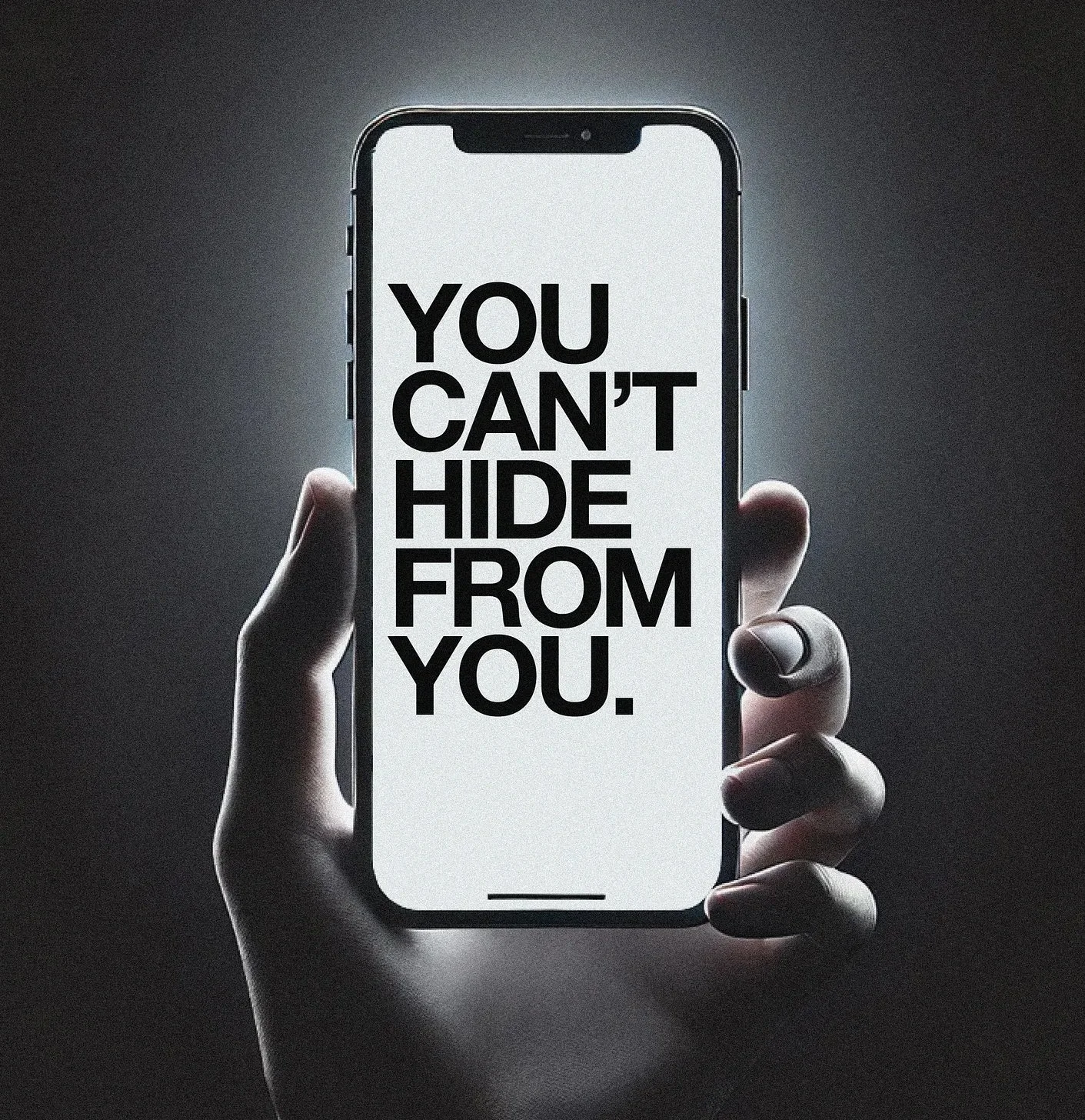
You can’t hide from you.
How iCal saved my soul.
Three words. One alert. Every Friday for 12 years straight. Progress not perfection. That’s the message that set me on track, corrected my direction, clarified my intent. Not an epiphany. Not from a guru. Just something I heard across the rooms, in the first days. It marked week one. The first Friday without a drink. I was prepared to fail on that day. Even if I made it through the week, Friday was the dead cert. The reward for surviving life over a whole seven days. The escape hatch. The collapse of all good intentions. But I knew—if I could survive that first weekend, I might stand a chance. So I typed three words into iCal as an event: Progress not perfection. And set it to repeat. Every Friday. Forever. Back then it was a warning shot. Don’t get cocky. You’re not out of the woods. Now it’s a fucking war cry. Keep going. Keep building. Keep moving forward. That one reminder is louder than my excuses. So—do you want to change your life? Start by honouring a single promise. Not to the world. To yourself. You ask, how? Set traps for your weaker self. Make it harder to slip. Make it easier to win. Put the message where you’ll see it. Where it haunts you. Don’t wait for motivation. Manufacture it. You don’t need a breakthrough. You need a system that won’t let you lie to yourself. Because in the end, we don’t rise to the level of our dreams. We fall to the level of our default settings.
So I post this article today at the start of a new beautifully clean and productive week. That’s 645 Friday calendar alerts. So yes—iCal saved my soul.
Your turn.
Pick one promise to yourself. Just one.
Not a goal. Not a dream. A promise. Something so simple you can’t wriggle out of it.
It could be: no phone in bed, run 3k before work, write one page a day, drink water before coffee.
Whatever you choose, set a trap for the weaker version of you. Put the reminder where you can’t ignore it—calendar alert, Post-it on the fridge, marker scrawled on your bathroom mirror.
When the moment comes and you want to duck out, don’t negotiate. Don’t justify. Keep the promise.
At the end of the week, look back and ask: Did I honour myself?
If yes—stack another promise on top. If not—strip it back and make it even smaller until it’s impossible to break.

The moment you stop waiting to be saved is the moment you begin to live with intent.
Every negative event carries within it the possibility of transformation. It rarely feels that way when you are in the middle of it. A failure at work, the end of a relationship, a health scare. These moments feel like endings, but if you stay with them long enough, they can open into something else — a new direction, a different way of living, an energy you didn’t know you had.
The Greek word crisis originally meant a point of decision. A turning. That is what the darker moments in life really are. Not final judgments but thresholds. The question is never whether they will happen — they always do — but whether you will be able to meet them with enough faith to step through to the other side.
Faith here doesn’t have to mean religion. It can mean trust in life itself. Trust that there are forces larger than your own limited perspective at work, shaping events in ways you can’t yet see. Without that kind of trust, life can feel brittle and hopeless. With it, even suffering takes on a kind of meaning.
Viktor Frankl, imprisoned in Auschwitz during the Second World War, gave one of the most striking examples of this. In Man’s Search for Meaning, he recalls a rumour spreading through the camp in 1944: the Allies would arrive to liberate them by Christmas. Prisoners pinned their hope on that promise. But Christmas came and went, and liberation was still months away. Frankl, who was forced to work as a camp doctor, recorded that more prisoners died between Christmas and New Year’s than at any other point. They had lost hope, and with it, the will to survive.
What this shows us is profound. By seeking external rescue, the prisoners left themselves exposed to despair when the promise was broken. Hope that depends only on outside forces is fragile. Frankl endured because he turned inward. He developed inner tools that allowed him to carry on regardless of what was happening outside the camp gates. He discovered that the only true freedom left to him was his choice of attitude.
This lesson matters today. When we rely on external validation, we set ourselves up for disappointment. The job title, the pay rise, the social approval, the imagined rescue — these can never be stable enough to carry us. Looking outside makes us dependent, and that dependency often slides into depression when the world does not deliver. The work is to build the inner posture: to cultivate confidence in our own thoughts, faith in our own process, energy drawn from within.
So the next time life turns against you, remember that the opportunity is hidden inside the negative. Looking outward for rescue will leave you empty. But working inward, and building faith in yourself, will give you strength not just to endure but to change the world around you.
Try this
Here’s a tool I’ve learned that can help transform low energy into forward momentum.
Begin by feeling the heavy, demoralised state that comes when you are depressed. Don’t run from it — focus on it. Then tell yourself you are going to change that feeling into something else. Above your head, imagine a powerful flow of energy, like a jet stream.
Now picture yourself taking a specific action that represents forward motion in your life. It could be a risk you’ve avoided, or a daily discipline — writing, exercising, meditating. Place this action in that jet stream above your head.
Now rise. Feel yourself fly straight up into that picture by sensing the act of doing it. Nothing else matters except taking this step. As you rise, let the world fall away. Enter the image. Once inside, tell yourself you have a purpose. Feel the surge of energy as determination takes root. This is what momentum feels like. This is what it feels like to move forward.
What happens to us in life may not be our fault, but how we think about it is our responsibility
It all begins with an idea.
It’s 5:14am in Dubai when I hear it most clearly. The city is still. I walk into the kitchen, empty but filled with the smell of freshly ground coffee. The fridge hums. This past week, the rhythm of my mornings has been shaped by notes exchanged across opposite time zones with a man living in an impossible situation.
The tone is always steady. No drama. No self-pity. Just facts: the small space, the routine of prison, the laps run in a yard bordered by a wall on one side and chain-link on the other. What is sought is simple - tools for the mind, ways to stop the space from shrinking and a connection with the outside world.
I offer breathing exercises. Five minutes. Eyes soft. Counting inhales. Stretching exhales. Then body scanning. I send across a book - Letting Go by David Hawkins. The good book. My bible. The most important book I’ve ever read. More than a levelling tool, it’s the foundation of how I coach. The core idea - that surrender is power, not weakness - sits behind almost every conversation I have with a client, and it feels never more relevant than in this situation.
This connection comes from my work with the Last Prisoner Project. Founded in 2019, In Denver Colorado. It is a nonpartisan organisation dedicated to ending the injustice of cannabis criminalisation in America. They take on cases one by one: clearing records, securing releases, and supporting people as they re-enter life. Their position is simple - if you can legally profit from cannabis, no one should remain behind bars for it.
Through them I offer counsel and presence to inmates - men in need of someone to talk to and exchange with. Small increments of time, through pre-arranged Zoom calls, hand written notes and emails, become a connection to the outside world. Even these briefest of communications carry weight: reminders that they are not forgotten, that their lives are still important, that people care and are fighting their corner.
The sentences are brutal. The crimes are not - often only possession. The world outside has changed beyond recognition for those incarcerated, yet their days repeat within narrow strips of concrete and wire. And still, even there, presence can be found.
This week I was sent a note by one of my men, that touched me deeply. It described a run in a prison yard somewhere deep in Mississippi. After our work on holding space, on learning to sit and meditate in small increments of time, this man described in beautiful detail how his soundscape suddenly came alive: the wind combing through a fringe of grass, two birds — one with a high, urgent call, the other slow and low. Feet finding rhythm. A guard’s radio crackling, then fading behind the birds. The yard seemed wider, not because the fences moved, but because attention did. It was a moment of beauty, caught inside a cage. To me a deeply poetic reminder of how much we overlook in our free lives.
This morning, my own practice felt different. The same kitchen. The same smell of coffee. I closed my eyes and noticed the faint whistle of the air-conditioning, the sharp scent of coffee, the distant tyres on tarmac. Ordinary sounds, alive when you catch them. But today, they carried more weight. More gratitude.
Progress lives in these small, stubborn acts of noticing. In a yard between concrete and wire. In the half-light of a quiet Dubai morning. And in the choice we all have — to pay attention, to see the beauty, and never take our freedom for granted.
Outside the window, a myna calls. I really listen, pour the coffee, press record, and talk.
Big Love
Chris
“Between stimulus and response there is a space. In that space is our power to choose our response. In our response lies our growth and our freedom.”
Viktor Frankl. Neurologist and Holocaust Survivor.

Joy is not lost. It’s just waiting for you to feel again
It all begins with an idea.
It’s a phrase I hear too often. “I’m OK.”
Those words hide more than they reveal. A client sits opposite me, smiling politely, telling me they’re “OK, broadly speaking” — and then, after a pause, admitting they feel like they’re slowly dying in front of their children’s eyes. Outwardly, everything appears intact: the career, the marriage, the stability. Inside, there’s only numbness.
This state has a name: anhedonia. The inability to feel joy. Food becomes bland. Music loses its pull. Achievements feel hollow. Family moments slip into duty. It isn’t sadness; sadness has texture. This is the absence of feeling itself.
What often sits underneath anhedonia is something called high-functioning depression. It doesn’t look like the stereotype. You still get out of bed. You go to work. You pay the bills. You show up for family. From the outside, you look fine — more than fine, maybe even enviable. But inside, there’s a slow erosion. A quiet despair. The problem is, because you’re still functioning, you may not realise you’re suffering at all. You dismiss the emptiness as a rough patch, a lack of motivation, just being tired. Meanwhile the days stack up, drained of colour.
And the reflex of our culture is to medicate. Antidepressants are prescribed at record pace. They can steady the floor, yes. But they also flatten everything else. The highs are blunted with the lows. Joy gets dulled along with despair. Life turns into management. Existence without depth.
But the truth few want to face: pain is not the enemy. As the Buddha said, life is pain. To deny pain is to deny life. It’s precisely through allowing ourselves to feel discomfort that joy becomes possible. You cannot numb selectively. When you mute suffering, you mute wonder. When you avoid pain, you also shut yourself off from joy.
The way back isn’t found in escape. It’s found in embodiment. Movement is the most direct route we have to reawaken feeling. Physical exertion — sweat, breath, heartbeat — reactivates the dopamine and serotonin pathways that anhedonia shuts down. When the body moves, it drags the mind with it. You remember you’re alive, not in theory but in the pulse of your veins.
One client told me, “When I sit still, I feel myself dying. When I move, I start to feel again.” That is the work. Not to float above suffering, but to step into it — to use the friction of pain as proof of life, and as the very condition that allows joy to return.
If you’re telling yourself you’re “OK, broadly speaking,” you’re not. That phrase is a mask. The deeper question is: are you willing to feel again? Not just the light, but the dark? Because you cannot reclaim joy without letting pain move through you.
This is where I can help. My work is about creating the structure and accountability to confront what you’ve been avoiding — to move, to feel, and to rediscover joy in the process of being fully alive.
If this speaks to you, don’t wait. Reach out. Together we’ll do the work that brings you back to yourself.
Big love. Chris
PS: Don’t hide from pain. It’s precisely by facing it — by choosing to move through it — that we return to feeling. And in feeling, we remember what it is to be fully alive.

In running, pain is innevitable. Suffering is optional. In life it’s the same
It all begins with an idea.
At 3am the alarm light cuts through the dark.
The apartment is dead quiet, the city still. I shoulder my kit bag packed with gels and hydration, and take my first steps towards the desert silence.
Saturday was my first trail run in the Dubai mountains. I’ve been running for over a decade, but this was different. Over an hour away the mountains waited, rugged and stony, dust settling into the air like a veil. The terrain felt almost Martian—red rock, alien dust, a landscape both hostile and beautiful. Light lifted fast. Within minutes the sky held a grainy wash, like a visionary photograph on Kodak film—edges raw, tones honest, the world stripped of filters. its 6am, and a 90 minute drive from The Palm, a small group of trail runners greeted me with warmth and friendly smiles, led by running coach Lee Hill of UltraPerformance. They welcomed me into a tight-knit circle of athletes, each ready to push themselves in the name of growth and improvement.
The first strides were awkward. Ankles stiff, breath high, the mind eager to negotiate. But the trail took hold. Gravel scattered, rhythm found its way, the wadi drew me forward. Haruki Murakami’s words landed again: pain is inevitable, suffering is optional. The climbs were sharp, the stones cut into balance, my lungs pulled for air. Every step asked more than the road ever had, yet something in me unknotted. The body carried the strife, the mind found its release.
What do I think about when I’m running? I’m not really sure. In the 50-degree evening heat it’s sometimes the thought—will my heart give in? Or maybe—this is making my heart stronger. When I’m sad, I think about the sadness itself, why it weighs so heavy. When I’m happy, the joy pulses through me like voltage. But mostly, I let thoughts drift. I see them as clouds—passing, reshaping, breaking apart. I imagine myself as the sky—constant, blue, vast—while the clouds come and go. Running makes that possible. To hold stillness inside motion.
And this is what movement really is: not a performance, not a diary entry to offset the hours of sitting, but a way of living. The mistake is to treat exercise like a box to tick. One hour against the tide of stillness. It doesn’t work. The body wants rhythm. It wants friction folded into the day. Walks between calls, stairs without thought, groceries carried, not wheeled. Honest movement.
Mood follows motion. Stillness feeds rumination, shallow breath, poor sleep. Movement clears the static and makes space between stimulus and response. Shoulders settle, the heart steadies, choices feel lighter. You don’t need to have faith in it. You only need to start.
Anchor the day with three non-negotiables: ten minutes outdoors at dawn, ten slow squats while the kettle boils, five minutes of mobility before bed. Add strength you can carry—push, pull, hinge, squat, carry—two or three short sessions that leave you capable, not broken. Close the day with breath: four in, six out, five minutes before sleep. Call it nervous system hygiene.
None of this is grand. It is simple, repeated. Rhythm beats drama. The mountains reminded me of this—the trail is not conquered, it is lived through, one step after another, clouds drifting, sky unshaken.
Back on the ridge, the sun was up, gold brushing the desert. Heat built, dust lifted with each strike of the foot. It was painful, the hardest run I’ve done in years. And yet it felt integral, like something had shifted. Running was once the most painful, hardest thing I had ever done. Now it has become part of my day like breathing or eating. Pain is inevitable. Suffering is optional. The desert trail—otherworldly as Mars—taught me this again. Movement heals, not by miracle, but by practice.
This week, move before you overthink. Walk before you scroll. Breathe before you argue. Choose friction over comfort. Build a rhythm you can carry into the week when it inevitably tests you.
Big love Chris.
P.S. If you want structure, I can help design a month with you: clear goals, a rhythm of anchors, strength and breath, all shaped around your real calendar so it stands up to ordinary chaos.
Subscribe.
Mondays don’t have to grind you down.
Sign up and I’ll help turn them into the start
of something better.